











Kensington Overview

Kensington is one of the most desired places to be in London. It has well-tended gardens at Kensington Palace and Holland Park which are free for the public to see. Kensington High Street is also filled with all the high street brands you could ever think of. It also has a wonderful mix of residents from all around the world. The local community is mainly made up of UK and European nationals together with residents from Russia, the Middle East and Asia.
Travel information
Kensington is well served by public transport. Most of Kensington is served by three London Underground stations in the Travelcard Zone 1: High Street Kensington, Gloucester Road and South Kensington. In addition, Kensington (Olympia) in Travelcard Zone 2 serves the western part of Kensington, with District line trains to Earl’s Court and High Street Kensington. Plenty of local bus services serve the Kensington area and link it to the surrounding districts. Some of these bus routes include numbers 9, 14 and 94 which can take you to such places as the Royal Albert Hall, Westminster and Oxford Circus.
History

The name of Kensington is said to have been originally called Chenesitone (as listed in the Domesday Book of 1086) which means “Chenesi’s ton” (homestead/settlement) in the Anglo-Saxon’s language.
The manor of Kensington which historically was in the county of Middlesex was handed to Geoffrey de Montbray, the Bishop of Countances (in Normandy) who was one of his advisors from his inner circle and one of the wealthiest men in England after the Norman Conquest. According to the Domesday book, Geoffrey de Montbray granted tenancy of Kensington to his follower Aubrey de Vere I, who was holding the manor from him as overlord in 1086. Robert de Montbray, the bishop’s heir rebelled against King William II and his vast feudal barony was forfeited to the Crown. After which Aubrey de Vere I became the tenant-in-chief which increased his status in feudal England. At the deathbed request of his eldest son Geoffrey he granted the church and an estate within the manor to Abingdon Abbey in Oxfordshire. When the de Veres became Earls of Oxford, their principal manor at Kensington became known as Earl’s Court as they were never at the manor, and their manorial business was not conducted in the great hall of a manor house but in a court house.
Local attractions
Kensington has a fantastic array of things to do. From seeing royal palaces to visiting one of the many museums on offer, you will be able to have so much fun!
Natural History Museum

Image courtesy of Drow male
The Natural History Museum exhibits a vast range of specimens from various segments of natural history.
The museum is home to life and earth science specimens comprising some 80 million items within five main collections: botany, entomology, mineralogy, paleontology and zoology.
If this is of interest to you, definitely check it out as its free to enter!
The Science Museum

Image courtesy of Christine Matthews
Conveniently next to the Natural History Museum you will find the Science Museum!
Here you will find exhibits on pretty much everything you could ever think of relating to science, from Victorian steam age through to space exploration, it’s absolutely amazing. You will find so many things which will inform, inspire and entertain you.
Entry is free!
Kensington Gardens

Image courtesy of Samuel Taylor Geer
If all the hustle and bustle of city life makes you crave some peace and quiet then you should head to Kensington Gardens.
There are many things to enjoy in the gardens, including a statue of Peter Pan and the Albert Memorial.
Kensington Palace

Image courtesy of Shisha-Tom
The official residence of the Duke (William) and Duchess (Kate) of Cambridge, which you are allowed to visit! When visiting you are allowed to wandering around various Royal State apartments and the gardens.
Don’t expect to bump into any Royalty though, but this is actual residence of William, Kate and Harry. There is always hope so keep your fingers crossed!
For more information click here
Accommodation
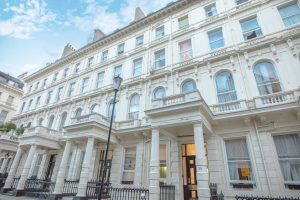 We don’t have rooms in Kensington itself, but two of our residences are just north of Kensington Gardens and both are catered, which is unusual in this part of London.
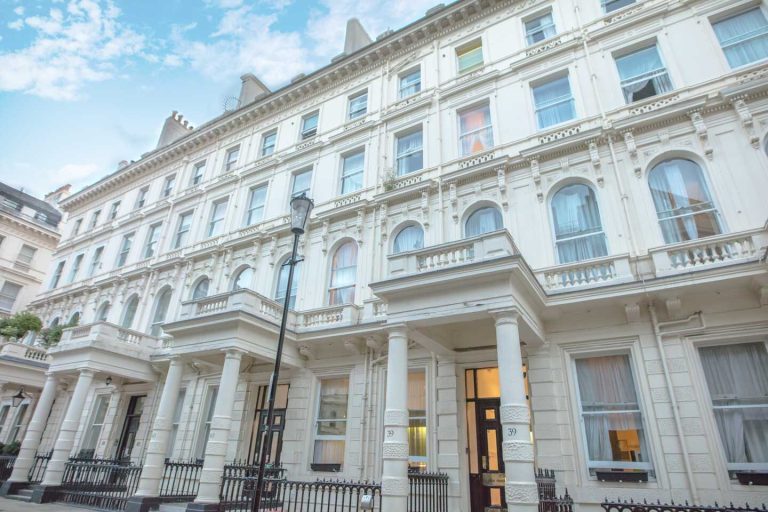
The Hyde Park residence is a Georgian townhouse at Lancaster Gate, looking straight out over Kensington Gardens. Two meals a day are included, along with bills, Wi-Fi and basic contents insurance. Rooms range from singles to four-bed shares, and most use shared bathrooms on each floor. There’s no lift, which is worth knowing if you’re bringing a big suitcase. Lancaster Gate station on the Central line is two minutes away. Residents must be 18 or over.
The Notting Hill residence on Ladbroke Road is bigger, with just over 300 residents, a gym, a garden and a TV lounge. It’s about a 20-minute walk from Kensington Palace, and Notting Hill Gate station (Central, Circle and District lines) is five minutes from the door. Imperial College is 15 to 20 minutes away. Meals are included here too.
If you’d rather cook for yourself, the Portobello residence has studios on the Regent’s Canal, further north, with a free shuttle bus to Notting Hill Gate and Westbourne Park stations.

 Italy
 Serbia
 Germany
 Spain
 Brazil
 Poland
 Netherlands
 France
 China
 UK
 Greece
 Ireland
 USA
 Hong Kong


